

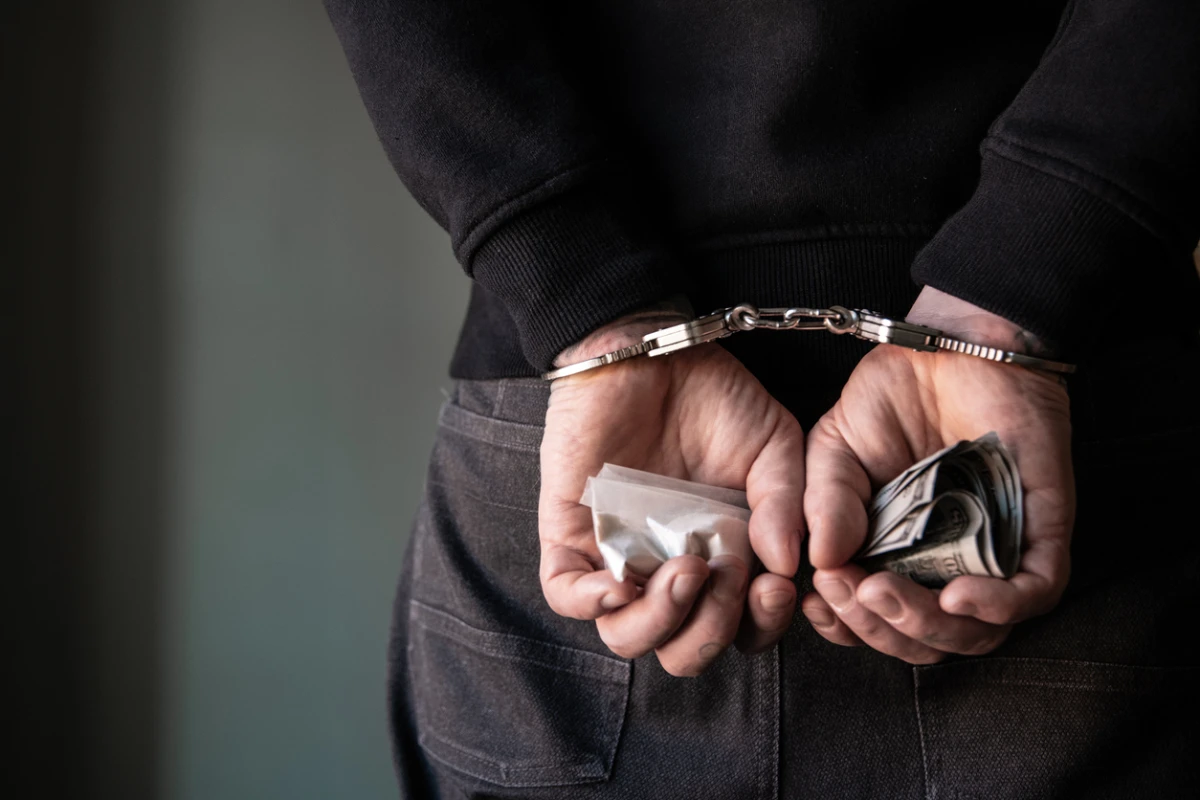
Drug charges move fast, and the stakes feel heavy right away. A single mistake in how a case is handled during the early stages can affect bond, the preservation of evidence, and future plea negotiations. At Hiltzheimer Law Office, we step in quickly to provide straight talk and diligent work so you can make informed choices in a high-pressure moment.
We are available days, nights, and weekends, and our clients receive the cell phone number of their own defense lawyer. Our criminal practice covers everything from DWI and drug possession to the most serious drug trafficking charges, ranging from misdemeanors to complex felonies in both state and federal courts.
Sound Legal Guidance in Drug Distribution Allegations
Possession with intent to sell or deliver carries much harsher penalties than simple possession. Because of this, the pressure mounts from day one. Having legal representation matters immediately, as decisions regarding bond terms and the initial review of the state’s evidence often unfold in the first few days after an arrest.
A skilled lawyer can review the police narrative, lab claims, and specific items found during the arrest to explain the legal defenses that fit your facts. Whether the case involves illegal drugs or prescription medications allegedly possessed without a valid prescription, we help you understand what the government must prove to secure a conviction.
The potential penalties for drug crimes vary by the type of controlled substance, the weight involved, and your prior criminal record. Conviction can lead to significant jail time, heavy fines, and the lifelong status of being a convicted felon, which impacts employment, housing, and other legal rights. Our goal as your defense attorney is to reduce your exposure at every turn.
Early Case Assessment and Defense Planning
We begin every case with a comprehensive initial consultation and a careful read of the charging documents. Our team requests body camera footage, dashcam recordings, and lab paperwork right away. Early work often reveals constitutional violations in the stop, search, or testing process.
A focused defense plan typically involves:
In the modern criminal justice system, digital evidence is king, but it is also incredibly fragile. Most commercial surveillance video systems, such as those at gas stations, convenience stores, or apartment complexes, automatically overwrite their footage every 2 to 30 days. If your defense attorney does not serve a preservation letter or subpoena that footage immediately, it may be lost forever.
We will evaluate the following data points as soon as we obtain discovery in every case:
- Dispatch Logs and CAD Reports: Computer-Aided Dispatch (CAD) logs provide a second-by-second timeline of the police response. We compare these to the officer’s written narrative to check for inconsistencies in how the drug possession was discovered.
- Property and Evidence Sheets: We review the “chain of custody” logs from the moment of seizure. If there is a gap in time between the arrest and the logging of the controlled substance at the station, the integrity of that evidence is compromised.
- Body-Worn and Dashcam Footage: We don’t just watch the video; we look for what wasn‘t recorded. Under the Fourth Amendment, if an officer turned off their camera during a critical part of the search, we raise that as a significant red flag.
Identifying Weaknesses: Dismantling the Prosecution’s Case
A legitimate claim by the state requires more than just finding drugs; it requires a constitutional path to that discovery. We “reverse-engineer” the arrest to find where the police officers may have cut corners.
Challenging Probable Cause
Every vehicle stop requires “reasonable suspicion,” and every search requires probable cause or a valid warrant. If an officer pulled you over for “weaving” but the dashcam shows you stayed perfectly within your lane, the entire stop is tainted. Without a valid reason for the initial interaction, any illegal substance found afterward may be inadmissible as “fruit of the poisonous tree.”
Scrutinizing Lab Proof and Testing
Many drug charges are based on “Field Colorimetric Tests,” small plastic pouches that change color when they contact certain chemicals. These are notoriously unreliable and frequently produce false positives for common household items or prescription medications. We press for full Gas Chromatography-Mass Spectrometry (GC-MS) testing and investigate the lab’s accreditation and internal protocols. If the lab technician has a history of errors or if the sample weight is incorrectly recorded, the prosecution’s case may be called into question.
Strategic Action Items
Once the evidence is gathered and the weaknesses are identified, we move from investigation to courtroom advocacy. This is where we take the fight to the prosecutor, judge, and jury.
- Motions to Suppress Evidence: This is the most powerful “Strategic Action Item” in a federal case or state felony. If we can prove an unlawful search occurred, we ask the judge to legally “delete” that evidence from the case. In many possession with intent to sell matters, if the drugs are suppressed, the case is dismissed before it ever reaches a jury.
- Locking in Witness Statements: Memories fade, and witnesses become susceptible to police pressure over time. We routinely use private investigators to take witness statements from bystanders or passengers. If a witness later changes their story on the stand, their initial statement can be used to impeach their credibility, creating the reasonable doubt with respect to key evidence in the case, which can amount to reasonable doubt when the case makes it to the jury.
- Professional Consultations: We often engage independent experts, including forensic chemists, toxicologists, and digital forensics experts, to review the evidence in a case. For example, a digital forensic expert may be able to that our client’s phone was pinging a cell tower in a different part of town at the time of the alleged transaction, in order to support an alibi defense.
Speed is critical in drug cases. Videos can be deleted, and witnesses often move. We also advise our clients on how to handle the criminal justice system while your case is pending, ensuring you don’t inadvertently provide the state with more evidence.
Analyzing Possession and Intent Allegations
In the legal system, there is a massive gap between simple possession and possession with intent. Simple possession means having a controlled substance (actual possession) or in a place you control (constructive possession). Possession with intent adds a claim that you intended to sell or deliver the substance to another person.
Prosecutors rarely have direct evidence of intent; instead, they rely on circumstantial evidence. They often point to specific “indicators of sale,” such as:
- Packaging: Multiple small baggies, vacuum sealers, or digital scales.
- Financials: Large amounts of cash in small denominations or “pay-and-owe” ledgers.
- Communications: Text messages or digital data that look like orders for controlled substances.
A defense lawyer pushes back by providing context. Perhaps the cash came from a legitimate job, the scale was for personal use to ensure safety, or the text messages show sharing among friends rather than commercial drug trafficking. If the state cannot prove intent beyond a reasonable doubt, charges may be reduced to mere possession or dismissed entirely.
Investigative Actions and Evidence Review
Our investigation runs on its own track, independent of the police report. We visit scenes and photograph locations to see if a police officer’s claim of seeing a hand-to-hand transaction was even physically possible from their vantage point.
We also scrutinize the Controlled Substances Act requirements and lab protocols. Errors in the chain of custody or the use of unreliable field tests can be devastating to the prosecution’s case. If the drugs involved were found in a shared vehicle or a house with multiple roommates, we highlight the lack of constructive possession to create reasonable doubt.
| Evidence Issue | Why It Matters | Defense Tactics |
| Illegal Search | Violates Fourth Amendment rights | File motion to suppress; exclude evidence |
| No Valid Warrant | Search may be unconstitutional | Challenge the “good faith” exception |
| Chain of Custody Gaps | Doubts about sample integrity | Cross-examine handlers; argue contamination |
| Innocent Explanation | Intent is not the only conclusion | Present evidence of personal use or shared access |
Motion Practice and Courtroom Advocacy
Pre-trial motions are the most powerful tools in a criminal lawyer’s arsenal. We aggressively pursue your constitutional rights by moving to suppress evidence resulting from an unreasonable search or an unlawful stop conducted without a valid warrant.
If a judge rules that an illegal search occurred, the “fruit of the poisonous tree” doctrine may require the court to throw out the illegal substance entirely. This often leads to a full dismissal of the criminal charges. In the courtroom, we use cross-examination to expose the lack of training or the procedural shortcuts taken by federal agents or local police.
Negotiation and Case Resolution Strategy
Not every drug-related crime ends in a trial. Some resolve through favorable outcomes like reduced charges, drug treatment programs, or diversionary tracks that protect your record. We match our strategy to your specific goals after weighing the risks posed by federal law or state sentencing guidelines.
Possible paths to a resolution include:
- Amended Charges: Reducing a felony charge to a misdemeanor, which significantly shrinks potential jail time.
- Deferral Options: Entering a program that results in a dismissal after the completion of community service and/or drug classes.
- Sentencing Advocacy: If a conviction is unavoidable, we present your “whole person” story, including work history and family support, to minimize severe penalties.
In cases involving prescription drugs, proving a valid prescription or a medical necessity can be a complete defense. We remain transparent about the risks of the court system while fighting for every possible advantage.
Facing Drug Charges? Contact Hiltzheimer Law Office Today
Hiltzheimer Law Office is dedicated to defending those facing drug possession charges and possession with intent to sell. We stay responsive and focused on results that protect your future. Call us at 919-726-8800 to learn more about our services. Whether you are dealing with a state-serious offense or a federal case, you deserve professional legal help that is accessible 24/7.