Possession of a Firearm by Felon Lawyer in North Carolina

20+
years of experience

100+
5-star reviews

100%
criminal defense
By federal law, a convicted felon isn’t allowed to possess firearms of any type. If you are charged with possession of a firearm, it’s important to contact a possession of a firearm by felon lawyer in North Carolina. At Hiltzheimer Law Office, our team can help you understand your rights and fight the charges you face.
Hiltzheimer North Carolina Possession of a Firearm by Felon Attorney
Our criminal defense lawyers have more than 20 years of litigation experience and a fierce dedication to our clients. We treat each client with respect and provide personalized defenses that give you the best chance to either beat your charges outright or negotiate for the most lenient outcome possible. We understand how much a conviction can impact your career, your relationships, and your freedom, so we’ll put on an aggressive fight to protect your future.
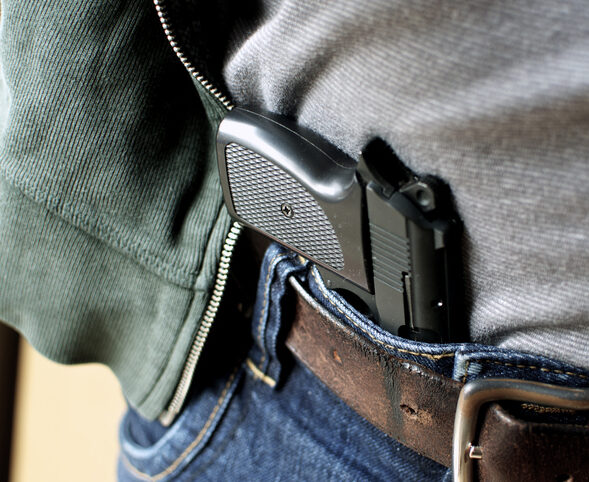
What Is Possession of a Firearm by Felon NCGS § 14-415.1 in North Carolina?
Possession of a firearm by a felon in North Carolina is a violation of both federal and state law. It’s vital to know that you don’t need to have the weapon on you to be charged with firearm possession. You can be charged with this Class G felony if you have a prior felony conviction and you purchase, own, or have in your custody, care, or control a firearm or “weapon of mass destruction,” such as a bomb. This law applies even if the felony conviction occurred in another state or under federal law.
For the purposes of a firearm possession charge, a firearm is any weapon that is made to discharge a projectile by the actions of an explosive. That includes a starter gun. It also applies to any firearm muffler or silencer, as well as a firearm’s frame or receiver. Antique firearms do not fall under the scope of this law.
In North Carolina, a gun restriction also applies to those who were acquitted of a crime by reason of insanity or who have been determined to lack mental capacity in a legal process that was the result of a misdemeanor assault that included pointing a gun.
This crime will not apply to individuals who have prior convictions solely for white collar offenses such as antitrust violations, unfair trade practices, or restraints of trade, and under a recent United States Supreme Court Decision (New York State Rifle & Pistol Association v. Bruen), there may be more legal avenues available to challenge the constitutionality of this law as applied in a given case.
If you’ve been charged with firearm possession, you need an experienced possession of a firearm by felon attorney in North Carolina to help you avoid another felony conviction or limit the consequences of this charge.
Penalties for Possession of a Firearm as a Felon
Generally, under North Carolina’s Felony Firearms Act, you could face another felony if you’re convicted of felony possession. It would be considered a second conviction because the underlying felony would be the first offense. You could face between 12 and 16 months of prison time. Depending on your criminal record, the penalties could be even greater.

Defenses and Strategies
Our gun possession defense lawyers will assess your case to ensure we can offer the robust defense you deserve. Because we know the potential penalties are severe if you’re convicted, we will conduct a thorough investigation.
We will conduct a detailed analysis of the evidence to determine if you were stopped and searched legally when the weapon was discovered on you or on your property. If law enforcement didn’t have probable cause or a warrant to search you, your attorney may be able to argue for suppression of the evidence.
Your criminal defense lawyer may also be able to develop evidence that the gun didn’t belong to you. This can be an effective strategy if you live with other people and the firearm wasn’t on your person at the time of the arrest. You may not even have been aware that there was a firearm present on the property, which are elements that the prosecution would have to prove beyond a reasonable doubt.
In many instances, people who don’t know much about weapons can mistake an antique and collectible firearm as something usable and able to cause mass death. Your criminal defense lawyer may be able to mount a defense prove that the weapon doesn’t work or that it’s for display purposes, and therefore defeating the charge against you.
Restoration of Firearm Rights
The laws for possession of firearm by a felon in NC do take into consideration white-collar crimes. It may be possible to have your felony conviction expunged if you were convicted of these types of crimes. That’s the case as a result of an expungement law passed in 2017. It only applies to nonviolent misdemeanors and felonies. Our possession of a firearm attorneys will look into this to see if you qualify.
Related Gun Offenses in North Carolina
There are a lot of North Carolina gun laws to be aware of besides possession of a firearm by a felon.
Concealed Weapon Without a Permit
You face serious consequences if you carry a concealed weapon without having a concealed carry permit. You need a permit to carry your firearm or other deadly weapon outside of your home. To be convicted of this crime, the prosecution’s case rests on proving that you knowingly and willfully carried a weapon outside of your home without a permit in a manner that was concealed.
Possession of a Firearm and Domestic Violence Charges
People who are subject to valid protective orders are also not allowed possession of a firearm. Even if you were never convicted of a crime, you will be prohibited from possessing a firearm if there is a valid civil domestic violence protective order in place.
Weapon Offenses Involving Minors
The Second Amendment allows Americans to bear arms, but it only applies to those who are of age. Permitting a child under 12 to use a firearm without adult supervision is a Class 2 misdemeanor, while those who sell or give handguns to minors will face a Class H felony.
You can also be charged if you store a gun in a manner that is unsafe and allows minors to access it. You can face a Class 1 misdemeanor if a minor gets a hold of the weapon and brings it into school, displays it in a public place, uses it to commit a crime, or causes personal injury or death with it that is not in self-defense.
Weapon Possession on Educational Property
North Carolina law forbids anyone from bringing an open or concealed weapon on school property. This includes “less lethal” weapons like BB guns, stun guns, and knives. Those in possession of a firearm can be charged with Class I felony. If they discharge the firearm, they may face Class F felony convictions. Anyone in possession of explosives on educational property faces Class G felony charges.
Weapon Possession on Other Prohibited Property
In North Carolina, you can’t bring an open or concealed weapon into courthouses or state property, as well as onto property where alcohol is sold or consumed. The only exceptions to this would be any armed security hired by the establishment. You’re also forbidden from bringing a weapon to parades or other demonstrations.
Firearm Serial Number Offenses
It’s illegal to alter, remove, or destroy a firearm’s serial number. This gun crime can earn you a Class H felony charge.
Attempted Possession of a Firearm and Related Offenses
Attempting to buy a firearm if you’re a felon is a crime itself, even if you try to do so from a gun store. There are other offenses that can accompany the attempted possession. To purchase a weapon, you have to fill out forms that ask for lots of information, including whether you have a felony conviction. If you lie on this form, that is also a crime.
Importance of Seeking Professional Help
The unlawful possession of a firearm by felons is severely punished in North Carolina. You can face lengthy prison sentences and fines that can cripple your future. If you’re a convicted felon and have been charged with possessing firearms, you need legal representation. You need an experienced criminal defense lawyer who has experience with this type of criminal case.
At Hiltzheimer Law Office, you can get help from a lawyer for possession of firearm by felon in North Carolina who will look into all of the circumstances surrounding the charges you face. An individual’s criminal record plays a significant role in these charges, so we’ll look into the prior felony to see if it was violent or nonviolent.
A skilled criminal defense attorney at Hiltzheimer Law Office will also negotiate with the prosecution to get the best deal possible if that’s your best option, or fight the case at trial if the district attorney won’t agree to a deal that you are comfortable with. No matter what, our possession of a firearm lawyers will fight for your freedom and your future.
Hire an Experienced Criminal Defense Lawyer
If you have a felony conviction and have been charged with firearm possession, you can be found guilty of violating North Carolina’s Felony Firearms Act. At Hiltzheimer Law Office, we’ll prepare an aggressive defense to help you achieve a favorable outcome for these criminal charges. Contact our team to schedule a free consultation with an experienced lawyer for possession of a firearm by felon.
Frequently Asked Questions
It is a criminal offense under North Carolina law for most convicted felons to possess, own, or control a firearm, whether directly or indirectly.
NCGS § 14‑415.1 makes it unlawful for a person convicted of a felony to possess a firearm, with limited statutory exceptions.
Possession can be actual (physical control) or constructive (power and intent to control), even if the firearm is not on the person.
Actual possession involves physical custody, while constructive possession applies when a firearm is accessible and under the defendant’s control.
This offense is typically a Class G felony, carrying the possibility of significant prison time depending on prior record level.
In most cases, no. Firearm rights may only be restored through specific legal processes or statutory exceptions.
Most felony convictions qualify, including violent and non‑violent felonies, subject to narrow exceptions under the statute.
Case length varies but often depends on investigation complexity, motions filed, and whether the case resolves by plea or trial.
Common defenses include lack of possession, illegal search and seizure, insufficient evidence, or statutory exceptions.
State charges arise under NCGS § 14‑415.1, while federal charges are prosecuted under 18 U.S.C. § 922(g) with harsher penalties.
In some cases, expungement or rights restoration may remove the prohibition, but eligibility is limited and highly fact‑specific.
Protective orders and concealed carry violations can create additional criminal exposure alongside firearm possession charges.
A conviction can impact job opportunities, housing, voting rights, and future sentencing exposure in criminal cases.
Sentencing depends on prior record level and can range from probation to substantial active prison time.
An experienced defense attorney can challenge evidence, suppress unlawful searches, negotiate reductions, or pursue dismissal.